
Peak-season retail compresses an unusual amount of work into a short window. Prices change, promotions overlap, inventory moves quickly and customers expect the shelf, app and checkout to agree. In that environment, a paper label is not just a piece of printing. It is a task that must be created, sorted, carried, installed and checked at exactly the right time.
Smart shelf labels change the workflow by turning the shelf edge into a connected endpoint. Their value is not limited to replacing paper. The larger benefit comes from coordinating information and making exceptions visible when store teams are under the most pressure.
01Launch promotions with fewer manual steps
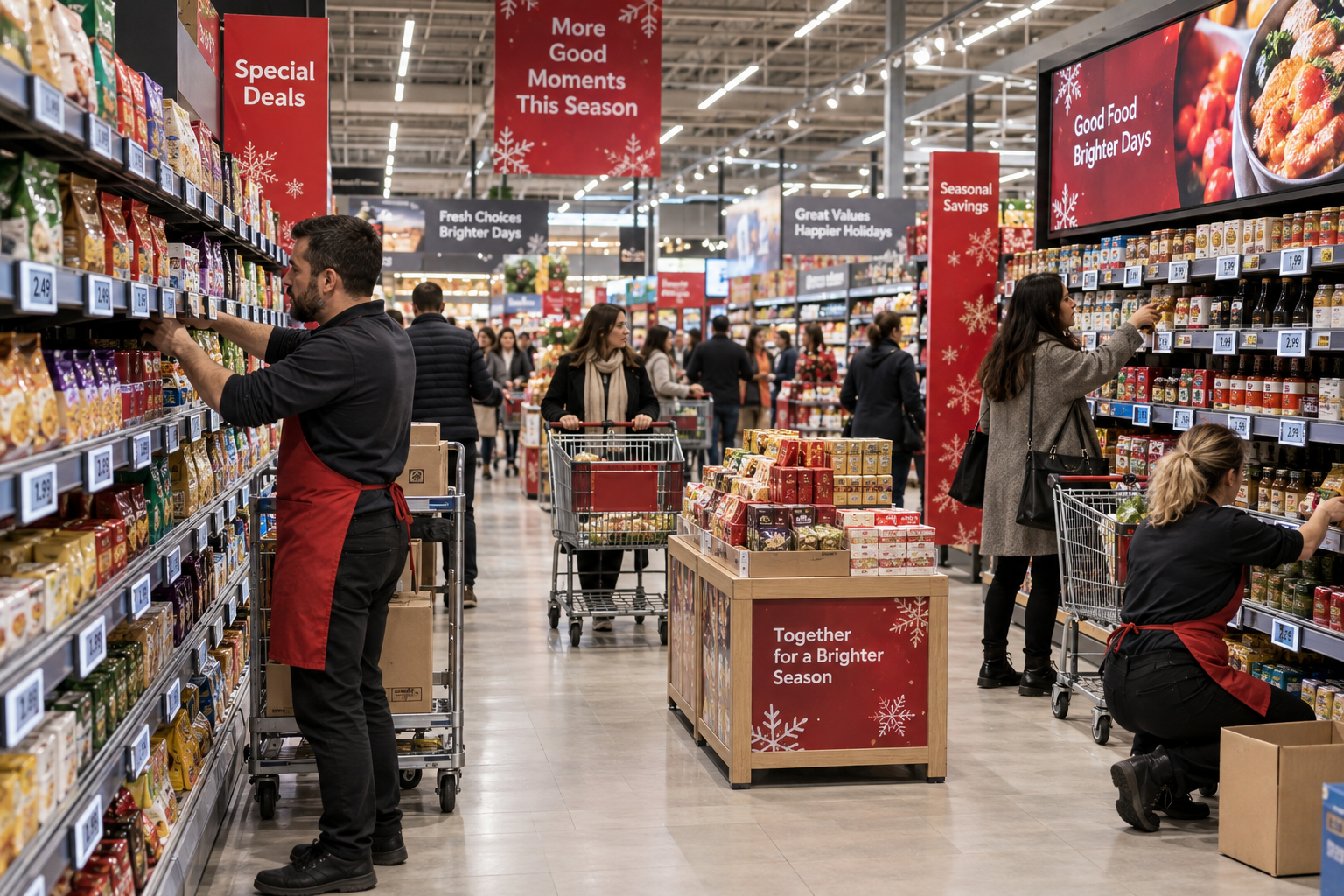
A connected process can prepare approved price and campaign changes centrally, send them through a gateway and update the assigned labels. This makes it practical to schedule a promotion for opening time, run a short flash offer or correct an error without sending employees through every aisle with a stack of printed tags.
Speed should not remove control. Retailers still need approval rules, valid start and end times, and a clear relationship between each product and label. Automation works best when it executes a well-defined process.
02Protect price consistency across channels
During a major sales event, a mismatch between shelf and checkout can create queues, manual overrides and lost trust. When the label workflow is connected to the approved pricing source, teams can reduce the number of independent manual steps that create discrepancies.
The system should also report completion. A sent update is not the same as a confirmed update. Operations teams need to see which stores, gateways or devices require attention so they can manage a short exception list instead of visually checking every shelf.
03Move labor toward customers and availability
Associates remain essential during peak periods, but replacing labels is rarely the highest-value use of their time. Reducing repetitive price-tag work allows employees to focus on replenishment, product questions, queue support, order pickup and keeping promotional displays organized.
The aim is not simply to remove labor. It is to place human attention where judgment and service matter most.
04Use the shelf edge for more than price
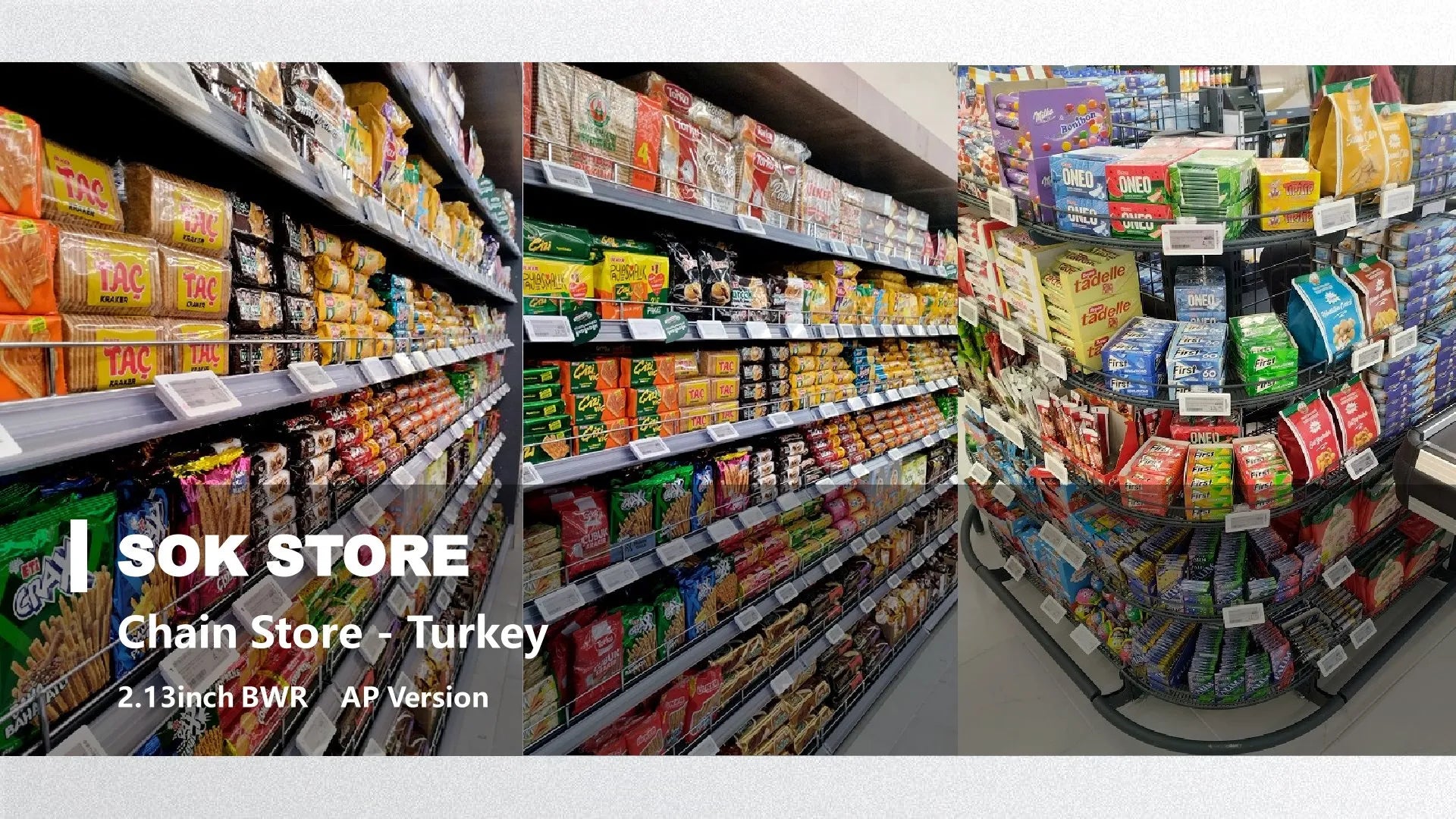
Electronic labels can show promotion periods, unit pricing, stock messages, product attributes and QR codes. Depending on the system, indicators can also guide picking or replenishment teams to the correct shelf location. That turns a display network into a practical store-operations layer.
Templates require discipline. Critical fields such as product identity, selling price, unit price and campaign dates should have protected positions and clear hierarchy. A visually exciting promotion is not useful if shoppers cannot understand it quickly.
05Prepare data and wireless coverage before the rush
Peak week is the wrong time to discover duplicate product records, incorrect label assignments or weak gateway coverage. A readiness plan should verify product data, store mappings, templates, network health, battery status and escalation contacts in advance.
Pilot testing should include difficult conditions: dense shelving, refrigerated cases, long aisles, metal fixtures and high device counts. Teams should rehearse a scheduled campaign, an urgent correction and a gateway outage so responsibilities are clear.
06Build an exception workflow
No connected system is perfect. A label may be damaged, moved, out of range or assigned to the wrong item. The operational design should explain how exceptions are detected, who owns them and how the physical shelf is verified after correction.
A useful dashboard prioritizes issues by customer impact. A failed update on a high-volume promotional item deserves faster attention than a noncritical information field on a stable product.
07Measure the event, not just the installation
Success should be tracked with operational metrics: campaign completion time, percentage of confirmed updates, pricing exceptions, staff time spent on label work, correction time and battery or connectivity incidents. Comparing these measures with the previous paper process reveals where the system creates value and where training or integration still needs work.
08Keep creating value after peak season
The strongest business case is not based on one promotional weekend. The same infrastructure can support routine price changes, markdowns, replenishment, picking, expiry communication and synchronized campaigns throughout the year.
Peak season simply makes the operational problem easier to see. When information changes faster than people can replace paper, a connected shelf gives retailers a more scalable way to keep stores accurate, responsive and ready for customers.